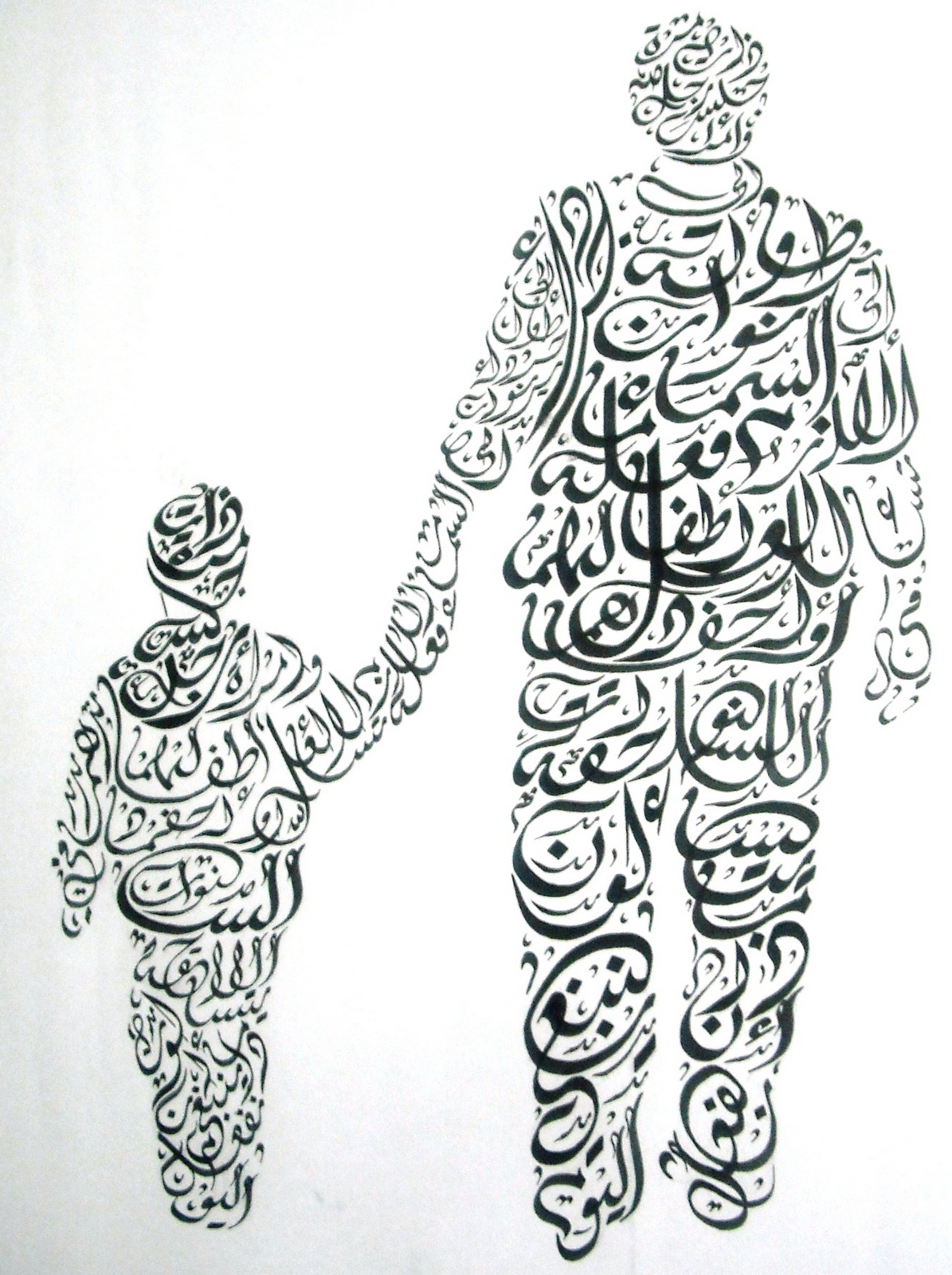
Author: Dr Malik Badri
I am very very happy to be here tonight. This gathering of young Muslim hearts, committed to Allah (swt) is something that really amazes elderly people like me. When I was your age and I used to go to the mosque for ‘ishaa prayer, if I remembered to do that. I found that in the mosque, there were only a few elderly people, with one leg in the grave and one leg still outside. They realised that they were about to die, so they came to repent. Young people would be out and about, some in bars and other bad places. So indeed, if after all this, Allah shows me that the young people are the ones now in the mosques, then this is a great tiding for the future of Islam.
It’s very good that you are in a country which gives you the freedom to make your ‘ibaadah (worship) the way you want. I was very pleased to know from Shaykh Yahya that there were at least a thousand people coming in and out of this mosque during its Open Day yesterday. It is very great that you did this. The Prophet (s) said that the one who does not thank human beings will not thank Allah. So we should thank people who give us refuge, freedom to worship and to make our own societies. It is an obligation on us, irrespective of their religion, to thank them for what they do. I would like also to give my great respect to Shaykh Yahya, the imam of this mosque and to the leader of the young, our brother here Shaykh Shadi. The Shadi is the one who sings beautifully, songs that inshaAllah give compassion to Allah (swt).
So my dear brothers and sons, it is important that we should think about the different aspects that make a balanced Muslim personality. I am going to talk about four different factors. It is the habit of scientists nowadays to try to reduce anything they want to study to its components. For example, if they have a compound, they want to see what elements make it up. From the elements that make the compound, they go down to the atoms that make the element, and the sub-atomic particles. All of this is called reductionism: you reduce something down. In the social sciences and in psychology, people also try to make a reduction of the factors that make a personality, factors that make up motivation, or things like this. But it is not successful in the social sciences, not like the physical sciences.
Now I want to see whether Islamic commitment and the balanced Islamic personality has any bits and pieces, so that we can say it’s made up of this and that? In the field of social psychology, there is what is known as attitude. You develop an attitude; you like, hate or act in a particular manner. The attitude is a complex form of behaviour. Psychologists try to divide attitude into three factors.
The first one they call the cognitive (or information). I will try to follow this in order to analyse the Islamic way of having a balanced, committed personality. But then I will show you that these elements are actually Islamic.
The cognitive: you must know that there is no god to be worshipped but Allah (swt). You must know the attributes and names of Allah; you must understand and remember that He is the Merciful, the Able, and the Sustainer of the whole universe, from the speck of dust floating in the air. Allah sees this and knows how many pieces there are, the atoms and sub-atomic particles. Allah sees and knows everything because He built the universe, He made it, and He brought it from nothingness. Also, He knows the very largest galaxy, which is millions of light years away from us.
It is very strange that we humans forget, Allah is around us all the time, whether you are two (the Qur’an says) or three or five or more than any number of people. It is unfortunate that we know this but still we sin. He is looking at us and we are sinning. The Prophet (s) said that there is nobody who is more merciful and patient than Allah. People curse Him morning and night, by saying that He has a son, that He is three or fire or an idol that they built. Yet He gives them food and drink and lets them live upon this earth. So, each person must have information, knowledge of what God is like.
It is unfortunate that many of our parents remind us all the time of how Allah will punish us, "If you do so and so, Allah will throw you in the fire!" They don’t give us also the beautiful aspects. Allah is loving. Allah is merciful with all human beings, Muslim or not. He is pitiful and He is merciful. We don’t say this. Many times, the mother is working and the child does something, "Oh, if you do so, Allah will put you in jahannam." The child hears of Allah’s punishment from a young age, but when the child does something good, they forget. When we grow up, whatever our perception of God was when we were little, will be with us all the time. That is why many people who have become depressed, the reason for their depression is that when they become young men and women, they may do something bad in their lives, like fornication. Then, because of all the times they heard of Allah’s punishment, they become afraid. They don’t know that if they made istighfar (asked for forgiveness), that Allah will wipe out their sins. We are not told that Allah will forgive all sins so easily.
Therefore, knowledge is the most important thing. If you develop wrong knowledge, then all your Islam will be spoilt. You develop the knowledge of Allah, you know that Allah selects some people to become His messengers. He gives them books that must be brought down by angels. So we believe in Allah, His angels, His revealed books, we believe in qadr (divine destiny). If Allah sees and knows everything, then indeed He knows what will happen to you from the time you are born till you go to your grave.
If you tell me, how come Allah knows and He is the one who makes qadr and death, and then He punishes us? Yes! A teacher in school today, if he sees a careless boy, he knows that the boy doesn’t come to class and when he does come, he doesn’t pay attention and is cheeky. The teacher will tell him, "You will fail." At the end of the year, the boy fails, but did the teacher make him fail? No! The teacher knew he would fail because of his behaviour. Allah has given us the freedom to choose. Allah does not force us to do bad things, this comes from our intention. Although you may intend something bad, Allah may prevent you the first time. But if you insist on doing the sin, then Allah will let you do it and you will get your punishment. Or, you think about doing something good, but you don’t do it, still Allah will give you a reward, for only thinking to do something good. And when you do something good, He gives ten times as much; if you do something bad, it is only once. Therefore, Allah is generous and is not interested in punishing us.
So if you develop this knowledge about Allah, then you will know the importance of being good to other Muslims. Now look at Shaykh Shadi, and the way he behaves lovingly to the young people. He doesn’t tell them, "You are the only Muslims and everybody else is kaafir." But if you meet some of these people, who make societies and movements, and then think that their movement is the only true movement. They think their movement is Islam and everybody outside it is kaafir and this can lead to killing. Why is this? Because they have developed the wrong information about their relationship with Allah and other Muslims.
This is very important to know: we can make movements and societies, but we should know that we are not the only Muslims. There are people outside who are better than us, whom we do not even know. A person might walk in the street like a beggar or so and Allah looks at him as being better than you, if you despise him.
Have you heard of the Khawaarij? Their main problem was that their information was wrong. They thought anybody who committed a major sin was kaafir. If a man fornicates – kaafir, if he drinks alcohol – kaafir. So they easily spoke about people as kaafir, Mu’awiyah, ‘Ali…etc.
Therefore, knowledge is what we call the cognitive factor.
Sometimes people have the knowledge, but they put it in the deep-freeze. They say the shahaadah from a cold heart. This is not right. You have to warm up these words, say them with feeling and mean what you say about your love for Allah and Muhammad (s). Amongst some groups in the Muslim world, they say, "Who is the Prophet? He is a man who was given a message, he gave it and he died, that’s finished. Don’t waste your time saying Allahumma salli ‘alaa sayyidina Muhammad. Only when Muhammad is mentioned, then you say Sallallahu ‘alayhi wa sallam, but don’t waste your time." Some people are like this, but what is this? These are people who do not have true emotion.
We, human beings, have a mind to know and judge things, but also we have a heart. The heart that makes us afraid or angry or anxious or makes us experience love, all of these are called emotions. Love is an emotion, and it moves you. Psychologists cannot define this inner feeling. So when you have the right knowledge, you must warm it up with these feelings. This is the second factor: the feelings, the heart (emotion).
The third factor: if you have the knowledge and it is warmed with your emotion, then you must do something — take action. Look at the Qur’an, the ones who have îmân in their heart and they do the good things. So you must see the practical aspect, in prayer, in fasting, in being good to your own brothers and sisters; the good aspect in being honest, in working hard for your community. This is the ‘amal, the action, the behaviour.
These are three factors: the cognitive (knowledge), the emotional (affective), and the behavioural, as classified in psychology. According to psychology, these are the three factors that make up an attitude.
But, as Muslims we have a fourth one: the spiritual, by which you feel and are conscious of Allah (swt) around you, all the time. I’m talking psychology to you, but do you think I got this from psychology? No, I got it from the Prophet (s).
The Prophet (s) and his companions were sitting in a simple room somewhere, when all of a sudden, a man came in. He was wearing robes so white that the companions in Madinah were surprised by its whiteness. He was very fair and handsome, with hair extremely black and beautiful. He came directly to the Prophet and he sat in front of him. His knees were touching the knees of the Prophet and he put the palms of his hands over the thighs of the Prophet and then said: "Oh Muhammad, tell me, what is iman?" Then the Prophet answered him, "Iman is to believe in Allah (swt), His angels, His books, the Hereafter (yawmil-aakhir), and to believe in destiny and fate (qadr)." Then he said to the Prophet, "You said the truth."
The companions were wondering why he asked the Prophet (s) and then told him: "You said the truth." Then he asked, "Tell me, Muhammad, what is Islam?" The Prophet said, "Islam is to say the shahadah, to pray, to fast, to pay zakaah, to make hajj when able."
Here the Prophet (s) is talking about two aspects, firstly the knowledge factor is the six pillars of iman (belief in Allah, the Last Day, qadr, etc). Then he spoke about Islam, which is the practical aspect (prayer, fasting, etc), what I have called the behavioural. Then he asked him, "Tell me, what is ihsaan?" He said, "Ihsaan is to worship Allah as though you see Him, because if you don’t see Allah, then surely Allah sees you." This is the spiritual aspect.
What is remaining? The emotional or affective, which we get from a number of the hadiths of the Prophet (s), when he speaks about love or about animosity towards the enemies of Islam. The Prophet (s) said: "Nobody’s îmân will be complete unless he loves me, the Prophet, more than himself, more than his family and more than all the people in the world.".
Look at this beauty of the Arabs at the time. They were really openhearted. We know whom the Prophet loved the most. Somebody came and asked the Prophet, "Oh Prophet of Allah, who is the person you love more than any other person?" The Prophet said ‘Aishah, his great wife. MaashaAllah, she was so knowledgable and such a great woman. Then he said, "Who comes next to her?" and he said her father, Abu Bakr. So we know, and it’s not something to conceal. But nowadays, in the Arab world, in Lebanon, Morocco, we don’t talk about it. I know one friend who went to ask his elderly brother, whose wife was sitting on a chair when he came to ask, "Brother Hassan, do you love Khadijah, your wife?" His brother responded, "Oh, you don’t have manners, how can you ask such a silly question?" Of course! We keep things inside, but this is not Islamic. We should be clear when we love a person, tell them we love them, for the sake of Allah.
So love is not knowledge. We don’t read a book or solve a problem and at the end say the result, therefore, I love so and so. No, it is something that comes from the heart. The Prophet (s) told us that when Allah (swt) instructed Jibreel (a) to go and destroy a certain village, the angel replied: "But in this village, there is Shaykh so and so. He is a pious man." Allah (swt) responded: "Start with him! His face never changed when he saw people doing bad things against Allah and talking against Allah." His face did not change - an emotion. If you see something that is wrong, you change it with your hand, or your tongue, or if you cannot then you change it with your heart and feelings. Some societies and countries bring up their people to be emotional, they say the Iraqis and Sudanese are like this. And some societies bring up their children to keep all their emotions inside and not show them, like the Malays. You will see a Malay and not know whether he is angry or happy - he will have the same face, not expressing his feelings.
The Prophet (s) once said to his companions: "Would you like me to tell you something which is better for you than spending gold and silver fisabilillah?" They said, "Oh yes, Prophet of Allah, tell us!" He didn’t tell them at once, but tried to motivate them further, saying, "Do you want me to tell you something which is better for you in the eyes of your Lord than to take your sword and fight your enemy?" They said, "Of course, please tell us!" He said, "Remember Allah." Be conscious of Allah (swt), this is the thing that can educate you.
Go step by step, until you reach a level at which Allah would love you, and when He loves you, He will become the legs with which you walk, He becomes the arms with which you work, He becomes the eyes with which you see and the ears with which you hear. Allah (swt) said this in a hadith qudsi, but what does it mean? It means that Allah (swt) will give you power and support with all these things, and this is the stage when a person can actually ask Allah anything and Allah will do it for him.
This is the stage of the wali, the stage of people who are like our great Muslim scholars and the companions. This is the stage when Allah will break the laws of this earth for their sake. Things that are strange, such as when the companions’ sticks lit up like torches so they could see their way late at night. This is the stage when the companion who was reading the Qur’an and he would see his horse moving and neighing loudly, when he stops reading, the animal stops. Then when he reads again, the horse begins again, so he opened the door and went out, and saw lights going up to the heaven. He went and related this to the Prophet (s) who told him that these were angels, who had heard him reading the Qur’an and came to listen. This stage cannot be reached except by ihsaan, to worship Allah as if you see Him, because if you don’t see Him, He is seeing you all the time.
Indeed, let us think about these these four aspects. To what extent have we completed them? We should have a balance, don’t just keep learning without your heart, like some of these dry-hearted fuqaha. Some of them are only interested in details, what would make the water impure or pure, and they don’t care about their hearts. And don’t be like the extreme sufis, who are only interested in their emotions, their heart, love and tasbeeh and they forget knowledge and action. So, be balanced and this will make you the right person for this age. And try to bring the message of Islam to the non-Muslims. Just change one person and it is better to you than the whole world and what it contains.
Transcribed by Sr Anna Blazey, Sydney
Dr. Malik Badri malik1932@hotmail.com
International Institute of Islamic Thought and Civilisation (ISTAC), Malaysia
A lecture presentation organised by the Australian Society of Islamic Psychology and FAMSY (NSW) on 30 September 2002 at the Lakemba Masjid.
SALAM Magazine, September-October 2002, http://www.famsy.com/salam/
A Parent's Guide to Raising Citizens of the World
As we have been witnessed to not so distance atrocities, genocides, and ethnic cleansing in Europe, in which the Bosniaks (Muslims of Bosnia-Herzegovina) and Kosovars (Muslim Albanians of Kosova) were the victims. Once again we are now witnessing the on going horror and killing and maiming of Palestinian, Chechnyan, Iraqis, Kashmiris, and Afghani children to name just a few victims of this on going onslaught on the Muslim children of the world. The world may be inured to it because it has become routine or because the victims are of a different faith, color or race. As Muslim parents we wonder how to explain this collective human propensity for brutality and inhumanity, mass killing and extermination to our children. We may offer them intellectual justification or hide behind the historical reality of ancient hatred, but we can never convince them of the necessity of such brutality and inhumanity.
The children must wonder whether the leaders of the nations are capable of telling them the truth, or their parents have the ability to teach them how to create a world where peace, liberty, justice and equity, rule of law, economic fairness, human equality, and international human rights would prevail.
The racism, greed, and religious hatred that have fanned the fires of war are still alive on the pages of newspapers, magazines, films, and novels, and they continue to pose a threat to the cultural and religious identity and well being of billions of people worldwide. How to ensure that the children become upright world citizens and are spared the vicious cycle of ethnic and religious hatred, human greed and lust for power?
Will the children, be able to transcend ethnic and religious hatreds, and the lust for power and wealth, to foster a global civil society based on the principles of fundamental freedom and human rights for all?
It will depend on what and how we teach and nurture our children, the future generation-in-the-making, to be good and worthwhile citizens of the world. There is indeed a way out of the vicious cycle.
Across the ages and throughout the world, parents, teachers, philosophers, religious and civic leaders have wrestled with the question of how to raise morally and ethically responsible citizens in every society and civilization. Today, the task before parents is greater: they have not only to raise good citizens of the state, but also to train them to be good citizens of the world, to be part of the community of nations and humanity that is bedeviled by atrocities, ethnic cleansing and genocide. There is indeed a revealed book “the Qur’an” full of wisdom and guidance to lead humanity out of vicious cycle of religious and ethnic hatred, tyranny, oppression, and war. “A Book we have revealed onto thee, in order that though mightest lead humankind out of the depth of darkness into light.” (Ibrahim 14:1) Indeed its simple directions for human conduct are plain and easy to understand and act upon. “And We have indeed made the Qur’an easy to understand and remember… “(Ibrahim 14:1)
The Qur’an provides an extensive insight into human nature and human behavior and the type of behavior Allah the absolute creator expects of His creation as His representative on earth. Allah says: 'I will create a vicegerent [to be my representative] on earth'. (Al-Baqarah, 2:30), a trustee of free personality or free will “… every soul draws the consequences of its own action.” (An-Nahal, 16:111), under moral obligation to change him/herself, society, and the larger environment to create morally and ethically balanced self and a just society (Ale-Imran, 3:110). Qur’an clearly states that human personality is not only physical and psychological but is also spiritual in nature, and is in the possession of self- consciousness, as well as, God consciousness (Al-An’am, 7:172).
Indeed, to fulfill the purpose of human creation, parents need to raise citizens who are morally responsible for establishing a just and peaceful local society as well as the world. “You are the best community which has ever been brought forth for the guidance of humankind. You enjoin good, forbid evil, and believe in Allah… (Ale-Imran, 3:110).
Therefore, the Qur'an provides clear guidance regarding one's relationship with oneself, with Allah the Creator and with all others in His creation since it [the Qur'an] tells us that He has created humanity from the same essence or 'nafs' (soul). “Humankind! Be conscious of your sustainer who created you of a single soul...”(Al-Nisa, 4:1) This conception of human creation, 'created of one soul', is unlike any other social, philosophical or religious thought that has been presented to humanity, because it leaves no room for racial, ethnic and gender superiority among nations and human diversity. 'And among His sign is the creation of heaven and the earth, and the variation in your languages and in your colors. Verily in that are signs for those who know.' (Ar-Rum, 30:22)
Moreover the focus of reform in the Qur’an is the individual personality, when it clearly points out that ‘the condition of the people will not change unless they change their thinking and behavior'. According to the Qur’an the locus of control is within the self, “Say every one acts according to his/her disposition” (Al-Issra 17:84). The child learns from young age how to be responsible for his/her behavior; this behavior includes relationships to parents, family, society and the world. Therefore, the role of parents in instilling these values – through education, public institutions or agencies, and private organizations – in their children as global citizens is vital and indispensable.
These days, to meet their own needs, parents increasingly rely on day care centers, baby sitters, tutors, educators, health care providers, early childhood classes and organised social activities. As partners in our children's education, however, we simply cannot abdicate our nurturing responsibility and leave outside educators and other professionals to instill ethical and moral values in our children without reinforcement and role model at home.
Children need role models, and parents are their primary examples. To be good role models themselves, parents must also have models or mentors of their own whose example they can emulate. For Muslim parents, the ideal role model is Prophet Muhammad, Sall-Allahu alayhi wa sallam. 'A good example you (men and women) have in Allah's Messenger, for all whose hope is in Allah and in the Final Day and who remember Allah frequently.' (Al-Ahzab, 33:21) His actions and deeds were local, but had global implications in terms of promoting social justice, economic equality, and harmony between different cultures, races, genders, and religions. We need to translate those Islamic global values into day-to-day reality for our children if they are to be worthy future representatives of Allah in the world community.
The most difficult and demanding challenge for parents today is not determining which civic or religious ideals to pass on to their children, but how effectively to translate them into daily routine. How can parents achieve this when both are juggling multiple jobs? Burdened by social and economic pressure, crime, violence, stressful family relationship, and a confusing political environment, they feel their confidence continually eroded as they try to be good nurturers and role models for their children. Therefore, parents also need guidance to help them translate Islamic ideals into daily life and the lives of their children. All this begins at home.
We must nurture and protect family as the primary social system and the natural environment for maximizing children's physical, psychological, and moral growth. Children need a safe, peaceful, tolerant, understanding, loving, free, and just environment in which to grow. As we move into the post-modern world of parenting, we must find fundamental universal principles to serve as signposts. A wealth of such principles, or signs (ayah), can be found in the Qur'an. While, these vital signposts already exist in our daily rhetoric, but parents need actively to apply them in their own homes. They need to understand the concepts and underlying meanings of these Qur'anic principles, and to translate them into everyday reality.
Children should be raised to understand fully their own rights, obligations and responsibilities as Muslims as well as of their parents, community, society and ultimately the world itself. The Qur'an directs the children persuasively, appealing to their emotions.
It asks children ‘to show kindness to parents; and if one of them or both of them attain old age then not even a word of disapprobation or disgust be uttered, let alone repulsing them’. They should be addressed politely and graciously, lowering unto them the wing of submission and kindness. The Qur’an links worship of Allah with kindness to parents. “Thy Lord has decreed that ye worship none save Him, and that you show kindness to parents...’ (Al-Isra, 17:23-24) 'And that you be kind to your parents...' (Luqman, 31:14)
Children must understand what it means to be a Muslim. It means, first and foremost, to believe in Allah, who is 'Rabb al-'alamin', Creator and Sustainer of all peoples and universe. The Qur'an tells us that Allah's creation is 'for just ends', not in 'idle sport'; humanity, fashioned 'in the best of moulds' and created to serve Allah.
According to Qur'anic teaching, service of Allah cannot be separated from service to humankind, or - in Islamic terms - believers in Allah must honour both 'Haquq Allah' (Rights of Allah) and 'Haquq al-'ibad' (Rights of creatures). Fulfillment of one's duties to Allah and humankind constitutes 'righteousness', as stated in Surah Al-Baqarah: 2: 177.
These basic concepts are first put into practice in the home; among our extended families, our friends, schools, places of work and worship, our communities, our country, and, finally, in the world. It involves parents in setting limits, formulating rules and teaching children to take moral responsibility for their own behavior as 'vicegerent' of Allah. This means also enforcing punishment or according privilege. Children may be guided by what parents say, but it is their deed and action that will have greater impact on their children. Therefore, it is for parents to shape the Islamic identity of the children as they prepare to inherit the global culture now being promoted so assiduously.
There are certainly no guarantees, but with these principles in mind, parents can expose the youth to basic global Islamic values and concepts, thus preparing them to be good citizens of the world. To achieve this goal, children need to know how to apply and integrate these basic Qur'anic principles to daily life:
1) Children must be able to think critically and rationally if they are to understand the Qur'anic principles governing human behavior in order to maintain a proper balance between knowledge ('ilm) and practice ('amal).
The Qur'an does not merely appeal to emotions while exhorting for belief and righteousness. It argues and appeals throughout the text to reason; it urges humankind to reflect on natural phenomena both in the heaven and the earth; and through a synthesis of observation and reflection to draw conclusions with the use of intellect.
2) Children should know their rights and responsibilities, which according to the Qur'an, begin at home and continue in concentric circles, encompassing the local and global arena.
3) Children should understand the importance of volunteering: at home, regularly helping their parents; and in the community by helping neighbors, sharing their time with the elderly, visiting the sick, and sharing resources with others.
4) Children should learn to fit in with others. It means resolving conflicts with fair words, not clenched fists; it also means listening to one another, expressing oneself, developing self esteem, being a good team player, having good manners, and demonstrating civility to all.
5) Children should learn to participate actively in the political process, so as to improve economic and social conditions, both locally and internationally. They need to understand that global action has local impact - in effect, they need to 'think locally, act globally'.
6) Children should make the natural environment part of their entire life's concern. As stewards (or caring preservers) and inheritors of this planet, it is their task to take responsibility for the world's finite resources and seemingly infinite consumption habits. This means into recycling, reusing materials, preparing and eating healthy and locally produced food, taking care of plant ecology and managing wisely the goods we have.
7) Children should be engaged in projects involving people in other countries to learn how to accept and celebrate human differences and gain self-confidence. They need to know that there are many others’ with whom we share this planet earth and its resources.
8) Children should understand that history indeed matters. The Qur'an draws attention repeatedly to the misdeeds of previous peoples, and to their destruction as the result of those misdeeds. The warning is that if the past produced all those disastrous results, or if, conversely virtuous deeds in the past bore fruits in the form of good results, there is a relationship between the past, present, and the future - and it is significant in fashioning human life.
9) Children need to understand where they come from and feel sufficiently confident in their own religious and cultural identity to appreciate others' customs and practices.
10) Children should experience the continuing, stable love of family and friends. This means being able freely to express emotions - love, humor, and respect - within the family.
Throughout history, parents have been there to provide civil society well adjusted, hardworking and honest future citizens. Effective civic education based on Islamic concepts indeed begin and continue at home where the laying of foundations is a daily process for the development of ethical and moral values reinforced through interaction with school and the larger community. Regardless of what messages children receive from schools, day care, or pre-school, they learn many of their profound lessons at an early age from their own family members.
Therefore, the family must be protected as the fundamental unit in society, and as the natural environment for children's emotional, physical, moral, religious and social well being and growth. Since children learn their first lessons in citizenship at home, parents must take the initiative, and be fully engaged in this process as the driving engine of society.
About the author:
*Mrs Wahida Valainte MSW.OASW is a family counselor and national vice president of Canadian Islamic Congress. She can be reached at wvaliante@sympatico.ca
Transformation in Prison: Facing Evil, Finding Hope, and Adopting New Values
Author: S. Muhammad M. J. Tehrani PhD
Prison is a loaded word. It evokes fear, cringing, abhorrence, and that ultimate human reaction, the desire for escape. There is something in the human being that would escape from confinement, from bars and walls and barbed-wire fences, from chains, discipline, and constant control. Despite our aversion, there may be no other institution which so desperately needs the care and attention of humanistic psychologists than a prison.
More than five years ago, at the request of prison authorities, I developed a prison reform program. Through this program we were able to facilitate significant changes in incarcerated individuals and in the prisons in which they live. These were changes that went beyond simply working toward a crime-free life. Finding values capable of integrating the entire human being, including social, physical, economic, psychological, and spiritual aspects, is the quest of the inmates in the program. To the degree that they are able to find and incorporate such values, these inmates are successful in achieving real change.
Our methods were multi-modal, and our goals were to reach all parts of the human being, with an aim at integration. To implement milieu therapy, we created a humanistic atmosphere in our section of the prison. Regular exercise programs, opportunities for fresh-air sports and field trips, offered a release for the physical.
To bolster economic skills, we made sure that inmates took advantage of the job-training programs extant in the prison and also encouraged them to develop their own handicrafts and cottage industries.
Social-skills training helped reduce suspiciousness and facilitate healthy interaction among inmates and staff as well. Cognitive changes occurred through lectures, readings, and discussions. Psychological support was available, primarily through group therapy, and also through individual, family, and marathon therapy. Integration Therapy was used to promote and integrate the total person. Spiritual growth flourished as the blocks existing in these other channels were cleared out.
But more important than our methods and our materials was the attitude and understanding that we had about prisons and prisoners. I believe it was this attitude which was instrumental to our success. Understanding this viewpoint means understanding our program.
In its original concept, a penitentiary is a place where a person goes to be penitent—to recognize his mistakes, to make amends, to seek forgiveness, and to undergo transformation. In theory it is a place for the person who has transgressed the laws of human nature, and thus transgressed upon his or her own soul. The penitent seeks renewal and a fresh chance at being human. Ironically, prisons these days are anything but humanizing. Tales of sadism, torture, cruelty, and horrors in prisons are in the daily news and need no elaboration here. But even in the best of circumstances, the very structure of most prisons tends to dehumanize.
Raymond Corsini (1995, personal communication) commented on his years of prison work: "I have seen murders in prison, seen executions, but worse [is] the slow, silent submission of people [who change] from being independent and alive to going out beaten and broken, not by violence, not by cruelty in the usual sense, but by slow erosion of unity of self by time, by routine, by following orders. It is very sad, the whole thing."
What hope is there then for changing prisons, and for changing prisoners? The answer to this depends on one’s outlook on prisoners. I believe that in our need to "escape" from prisons, we see the person who has committed a crime as fundamentally different from ourselves. Instead of seeing a human being, we see a psychopath, or sociopath, or multiple personality, or whatever other visage is foreign enough to our own to make us feel secure.
Facing the prisoner means facing the shadow in oneself. It means seeing our own capacity, as human beings, to be evil, to think evil, and to commit evil. Recognizing this common factor helps pull away the veil from the prisoner, and from ourselves. I have found that the very first characteristic necessary in any prison worker is the ability to recognize his or her own capacity for evil.
Next, I believe it is necessary to be able to recognize that along with this capacity for evil exists a capacity for goodness, for growth, and for actualization of positive potentials. Reaching this core of goodness is the challenge that we face when dealing with convicted persons.
Speaking from an Islamic perspective, we know the human being to have a positive potential, but also to be capable of acting against this positive inner nature and committing crimes or sins against one’s own nature. The human being is also endowed with a conscience, an alarm set off by transgressions. The person who listens to the call of the conscience and reforms has grown as a human being and has gained self-knowledge. The person who ignores the conscience goes farther and farther from his own nature and makes the return ever more difficult.
Dutch prison criminologist Julie Feldebrugge summarized her experience by saying that the problem with criminals was not a lack of conscience, as criminology has formerly held. Rather, these were individuals who were troubled deeply by their transgressions, and acted out in ways that expressed this trouble and torment, causing them to go deeper and deeper into crime. (Feldebrugge, J.T.T.M., "Rehabilitation of Patients with Personality Disorders: Patient-Staff Collaboration Used as a Working Model and Tool," Criminal Behavior and Mental Health 2, pp. 169-177, 1992.)
Carl Goldberg gave further insight into the person who commits crime in his finding that evil begins with a lack of empathy and progresses into a total lack of sensitivity to the humanity, and thus the rights, of others (Goldberg, C. "Daimonic Development," Journal of Humanistic Psychology, 35 (3) pp. 7-36, 1995).
Persons who commit criminal acts are individuals who lack a positive sense of self. They are often individuals who come from backgrounds in which they never tasted positive regard, never knew what it is to be loved or even minimally accepted or attended to. This has, in turn, compromised their ability to have empathy for others; not ever having been understood or cared about, they are unable to learn to understand and care about others, and thus commit crimes against them. Ironically, most prison situations are a continuation or exacerbation of the lifelong, dehumanizing experiences of the inmates.
In our treatment program, we set about to repair and mend, to find that self-crying for empathy, and to teach empathy in return. First, however, it is necessary to break through the wall of defense. In our experience, the resistance of the prisoners is largely a resistance to their own sense of guilt, a resistance to face the magnitude of their transgressions.
To deal with this, we created a therapeutic atmosphere in our section of the prison. In this atmosphere, empathy, genuineness, positive regard, and therapeutic presence were extended to staff and inmate alike. The prison environment is often heavily adversarial, with staff pitted against prisoners. Prison staff, guards, and other personnel may separate themselves from con- fronting prisoners as persons, perhaps for the reasons mentioned above of trying to deny or avoid their own negative aspects. Added to this is the burden and sometimes the guilt of being "my brother’s keeper," of sharing responsibility for the continued incarceration of another human being. Staff was relieved at the opportunity to receive empathy, and to learn to extend it to others.
Inmates also responded to the call to their humanity. Giving respect to the human being, while condemning the crime, we were able to allow inmates to separate their selves from their behavior, to respect themselves, but to hate their crime. They suffered agony, pain, and breakdown as their defenses broke down and as they faced their guilt. We supported them through this process. Battered consciences were revived and enlivened. It was interesting to note that many of the most tormenting memories uncovered were not of the crimes for which they were convicted, but of other transgressions, usually of an interpersonal nature.
Further, in therapy, many clients expressed the belief that these uncovered sins of meanness, cruelty, and violation of the rights of others were the "real" reason they were in prison.
After being in the program for months, one client decided to face the family he abandoned when he got involved with drugs and crime. I went to her house, rang the bell, and she opened the door. After 15 years, there she was. But her face was broken, so broken. (Here he bursts into tears rolling his head back and forth.) And I could see so many white hairs. I ruined her life. I ruined her life. (He cries again, and it takes time for him to control himself.) She said to me, "So it’s you, what business do you have here, what could you possibly want from me?" I could hear noises in the background, someone moving around. I told her "I came to see my daughters." She said, "You don’t have any children here. These children have no father. If they had one, he would have shown up by now." I felt so ashamed. I just didn’t expect her to answer like that. She has the right . . . but I just didn’t expect it. (Here, the client withdrew into sobs.) I just felt so worthless, like such a bum for having let her and the kids alone for all these years.
Facing such guilt is often excruciatingly painful and requires support. Simply facing guilt, however, is not enough. Hope and belief in the possibility of change is the next essential step. The staff’s support, encouragement, and genuine belief that inmates could change helped inmates be able to see themselves in a new way. The staff at this point focused on that positive inner potential, and inmates learned to sense this as well. An important factor in instilling hope was the work of the peer counselors. Through the grace of God, many of the most notorious inmates—with a reputation in the prison as well as in outside society of being tough, clever, and incorrigible—were able to make significant changes while in the program.
One such person had been a multiple offender. From early youth, he had been picked up for gang fights, knifing, petty theft, and then later for repeated offenses of drug use and trafficking. A huge hulk of a man, he was a model tough guy for youths who had no other hope for an identity other than to become delinquents and felons. He has under- gone great transformation in the program. Voluntarily serving as a peer counselor, his powerful presence in the prison milieu, as well as his participation in group therapy, provides a great source of hope and inspiration for others.
At this point, when individuals are hopeful of building a new self, they need a plan, a set of values on which to base this new self. Most important is to replace the old set of values. Goodness, a clear conscience, respect for humanity, and in many cases, worshiping God, take the place of opportunism, quick profits, and respect from the "gang," as targeted goals.
One of the most difficult challenges that inmates face is making the transition to life on the outside. This is one of the reasons that a halfway house is an integral part of our program. As the men in our program emerged from the prison, the expectations their families had of them rose considerably. Before imprisonment, the needs and demands of the family could be met quickly through crime; now, the individual had to face making it the hard way. A lack of legitimate, marketable skills, the dullness of a "clean" life as compared to the thrill of drugs and crime, the prejudice of society against giving ex-prisoners jobs, all combine to make this period an especially critical one. Depression, frustration, and anger often accompany this phase, and are dealt with in weekly group therapy sessions.
In a typical group session, one group member said: Yeah, I mean, a man’s value, being a man, means that when you walk in that house, and the kids and the wife look at you, you have something in your hand to show them. I mean, they don’t say anything, but when I come in empty-handed, I see the disappointed look on their faces, and they just turn off and go to their rooms. It rips me up inside. Then, my buddies meet me on the street, hug me, and slip a little "package" into my pocket, just like old times. I mean I could sell this, or at least use it and forget my troubles. I don’t know doc, you gotta help me. I just can’t stand it much longer.
Another member of the group, who had been convicted on armed robbery charges, a silent type who was rarely heard from, spoke up. "I have the same problem, in a way. We can’t afford a lot of things, like we can’t buy chicken, or even rice [a staple food in his culture]. But, to me, I mean, this doesn’t make me feel worthless. ’Cause I know that if I do something, anything, outside the law, or even something that just doesn’t sit right with me, then that would really make me feel useless. It would make me feel as if all of these years, all of this hard work in these sessions were wasted. I would really feel worthless then. I would feel that I betrayed myself and all the people who care about me. My family has gotten used to it. I know what they need, and they know I care. But they have gotten used to me like this, and they may even prefer me like this. I don’t know. But I know I just can’t go back to being any other way."
Spirituality is often released when the individual is able to break through the barriers of a blocked conscience. Individuals in the program are provided ample time for thought, introspection, meditation, and spiritual study, should they be so interested.
The road to recovery is long and difficult, requiring support from others and self-vigilance. Persons released from the prison attend on-going classes, may participate in group therapy, and have access to individual, family, and crisis counseling upon demand.
In my experience, facilitating transformations in prisons requires the courage to look in the mirror of the human and see the face of evil and the face of goodness. It requires a belief in the human ability to change; it requires support, hard work, and in our experience, the grace of God.
About the Author:
SAYID MUHAMMAD-MUSHIN JALALI-TEHRANI, Ph.D., is a graduate of Saybrook Institute. In addition to his prison project, he does consulting and clinical work, and is the developer of Integration Therapy. He founded the Islamic Association for Humanistic Psychology in Mashhad, Iran. He welcomes contact at tehrani@emamreza.net and more about his work can be seen at www.geocities.com/j_tehrani_phd
Prison is a loaded word. It evokes fear, cringing, abhorrence, and that ultimate human reaction, the desire for escape. There is something in the human being that would escape from confinement, from bars and walls and barbed-wire fences, from chains, discipline, and constant control. Despite our aversion, there may be no other institution which so desperately needs the care and attention of humanistic psychologists than a prison.
More than five years ago, at the request of prison authorities, I developed a prison reform program. Through this program we were able to facilitate significant changes in incarcerated individuals and in the prisons in which they live. These were changes that went beyond simply working toward a crime-free life. Finding values capable of integrating the entire human being, including social, physical, economic, psychological, and spiritual aspects, is the quest of the inmates in the program. To the degree that they are able to find and incorporate such values, these inmates are successful in achieving real change.
Our methods were multi-modal, and our goals were to reach all parts of the human being, with an aim at integration. To implement milieu therapy, we created a humanistic atmosphere in our section of the prison. Regular exercise programs, opportunities for fresh-air sports and field trips, offered a release for the physical.
To bolster economic skills, we made sure that inmates took advantage of the job-training programs extant in the prison and also encouraged them to develop their own handicrafts and cottage industries.
Social-skills training helped reduce suspiciousness and facilitate healthy interaction among inmates and staff as well. Cognitive changes occurred through lectures, readings, and discussions. Psychological support was available, primarily through group therapy, and also through individual, family, and marathon therapy. Integration Therapy was used to promote and integrate the total person. Spiritual growth flourished as the blocks existing in these other channels were cleared out.
But more important than our methods and our materials was the attitude and understanding that we had about prisons and prisoners. I believe it was this attitude which was instrumental to our success. Understanding this viewpoint means understanding our program.
...the very first characteristic necessary in any prison worker is the ability to recognize their own capacity for evil. |
In its original concept, a penitentiary is a place where a person goes to be penitent—to recognize his mistakes, to make amends, to seek forgiveness, and to undergo transformation. In theory it is a place for the person who has transgressed the laws of human nature, and thus transgressed upon his or her own soul. The penitent seeks renewal and a fresh chance at being human. Ironically, prisons these days are anything but humanizing. Tales of sadism, torture, cruelty, and horrors in prisons are in the daily news and need no elaboration here. But even in the best of circumstances, the very structure of most prisons tends to dehumanize.
Raymond Corsini (1995, personal communication) commented on his years of prison work: "I have seen murders in prison, seen executions, but worse [is] the slow, silent submission of people [who change] from being independent and alive to going out beaten and broken, not by violence, not by cruelty in the usual sense, but by slow erosion of unity of self by time, by routine, by following orders. It is very sad, the whole thing."
What hope is there then for changing prisons, and for changing prisoners? The answer to this depends on one’s outlook on prisoners. I believe that in our need to "escape" from prisons, we see the person who has committed a crime as fundamentally different from ourselves. Instead of seeing a human being, we see a psychopath, or sociopath, or multiple personality, or whatever other visage is foreign enough to our own to make us feel secure.
Facing the prisoner means facing the shadow in oneself. It means seeing our own capacity, as human beings, to be evil, to think evil, and to commit evil. Recognizing this common factor helps pull away the veil from the prisoner, and from ourselves. I have found that the very first characteristic necessary in any prison worker is the ability to recognize his or her own capacity for evil.
Next, I believe it is necessary to be able to recognize that along with this capacity for evil exists a capacity for goodness, for growth, and for actualization of positive potentials. Reaching this core of goodness is the challenge that we face when dealing with convicted persons.
Speaking from an Islamic perspective, we know the human being to have a positive potential, but also to be capable of acting against this positive inner nature and committing crimes or sins against one’s own nature. The human being is also endowed with a conscience, an alarm set off by transgressions. The person who listens to the call of the conscience and reforms has grown as a human being and has gained self-knowledge. The person who ignores the conscience goes farther and farther from his own nature and makes the return ever more difficult.
Dutch prison criminologist Julie Feldebrugge summarized her experience by saying that the problem with criminals was not a lack of conscience, as criminology has formerly held. Rather, these were individuals who were troubled deeply by their transgressions, and acted out in ways that expressed this trouble and torment, causing them to go deeper and deeper into crime. (Feldebrugge, J.T.T.M., "Rehabilitation of Patients with Personality Disorders: Patient-Staff Collaboration Used as a Working Model and Tool," Criminal Behavior and Mental Health 2, pp. 169-177, 1992.)
Carl Goldberg gave further insight into the person who commits crime in his finding that evil begins with a lack of empathy and progresses into a total lack of sensitivity to the humanity, and thus the rights, of others (Goldberg, C. "Daimonic Development," Journal of Humanistic Psychology, 35 (3) pp. 7-36, 1995).
Persons who commit criminal acts are individuals who lack a positive sense of self. They are often individuals who come from backgrounds in which they never tasted positive regard, never knew what it is to be loved or even minimally accepted or attended to. This has, in turn, compromised their ability to have empathy for others; not ever having been understood or cared about, they are unable to learn to understand and care about others, and thus commit crimes against them. Ironically, most prison situations are a continuation or exacerbation of the lifelong, dehumanizing experiences of the inmates.
In our treatment program, we set about to repair and mend, to find that self-crying for empathy, and to teach empathy in return. First, however, it is necessary to break through the wall of defense. In our experience, the resistance of the prisoners is largely a resistance to their own sense of guilt, a resistance to face the magnitude of their transgressions.
...many clients expressed the belief that these uncovered sins of meanness, cruelty, and violation of the rights of others were the "real" reason they were in prison. |
To deal with this, we created a therapeutic atmosphere in our section of the prison. In this atmosphere, empathy, genuineness, positive regard, and therapeutic presence were extended to staff and inmate alike. The prison environment is often heavily adversarial, with staff pitted against prisoners. Prison staff, guards, and other personnel may separate themselves from con- fronting prisoners as persons, perhaps for the reasons mentioned above of trying to deny or avoid their own negative aspects. Added to this is the burden and sometimes the guilt of being "my brother’s keeper," of sharing responsibility for the continued incarceration of another human being. Staff was relieved at the opportunity to receive empathy, and to learn to extend it to others.
Inmates also responded to the call to their humanity. Giving respect to the human being, while condemning the crime, we were able to allow inmates to separate their selves from their behavior, to respect themselves, but to hate their crime. They suffered agony, pain, and breakdown as their defenses broke down and as they faced their guilt. We supported them through this process. Battered consciences were revived and enlivened. It was interesting to note that many of the most tormenting memories uncovered were not of the crimes for which they were convicted, but of other transgressions, usually of an interpersonal nature.
Further, in therapy, many clients expressed the belief that these uncovered sins of meanness, cruelty, and violation of the rights of others were the "real" reason they were in prison.
After being in the program for months, one client decided to face the family he abandoned when he got involved with drugs and crime. I went to her house, rang the bell, and she opened the door. After 15 years, there she was. But her face was broken, so broken. (Here he bursts into tears rolling his head back and forth.) And I could see so many white hairs. I ruined her life. I ruined her life. (He cries again, and it takes time for him to control himself.) She said to me, "So it’s you, what business do you have here, what could you possibly want from me?" I could hear noises in the background, someone moving around. I told her "I came to see my daughters." She said, "You don’t have any children here. These children have no father. If they had one, he would have shown up by now." I felt so ashamed. I just didn’t expect her to answer like that. She has the right . . . but I just didn’t expect it. (Here, the client withdrew into sobs.) I just felt so worthless, like such a bum for having let her and the kids alone for all these years.
Facing such guilt is often excruciatingly painful and requires support. Simply facing guilt, however, is not enough. Hope and belief in the possibility of change is the next essential step. The staff’s support, encouragement, and genuine belief that inmates could change helped inmates be able to see themselves in a new way. The staff at this point focused on that positive inner potential, and inmates learned to sense this as well. An important factor in instilling hope was the work of the peer counselors. Through the grace of God, many of the most notorious inmates—with a reputation in the prison as well as in outside society of being tough, clever, and incorrigible—were able to make significant changes while in the program.
Resistance is largely to ... guilt... to face the magnitude of their transgressions. |
One such person had been a multiple offender. From early youth, he had been picked up for gang fights, knifing, petty theft, and then later for repeated offenses of drug use and trafficking. A huge hulk of a man, he was a model tough guy for youths who had no other hope for an identity other than to become delinquents and felons. He has under- gone great transformation in the program. Voluntarily serving as a peer counselor, his powerful presence in the prison milieu, as well as his participation in group therapy, provides a great source of hope and inspiration for others.
At this point, when individuals are hopeful of building a new self, they need a plan, a set of values on which to base this new self. Most important is to replace the old set of values. Goodness, a clear conscience, respect for humanity, and in many cases, worshiping God, take the place of opportunism, quick profits, and respect from the "gang," as targeted goals.
One of the most difficult challenges that inmates face is making the transition to life on the outside. This is one of the reasons that a halfway house is an integral part of our program. As the men in our program emerged from the prison, the expectations their families had of them rose considerably. Before imprisonment, the needs and demands of the family could be met quickly through crime; now, the individual had to face making it the hard way. A lack of legitimate, marketable skills, the dullness of a "clean" life as compared to the thrill of drugs and crime, the prejudice of society against giving ex-prisoners jobs, all combine to make this period an especially critical one. Depression, frustration, and anger often accompany this phase, and are dealt with in weekly group therapy sessions.
In a typical group session, one group member said: Yeah, I mean, a man’s value, being a man, means that when you walk in that house, and the kids and the wife look at you, you have something in your hand to show them. I mean, they don’t say anything, but when I come in empty-handed, I see the disappointed look on their faces, and they just turn off and go to their rooms. It rips me up inside. Then, my buddies meet me on the street, hug me, and slip a little "package" into my pocket, just like old times. I mean I could sell this, or at least use it and forget my troubles. I don’t know doc, you gotta help me. I just can’t stand it much longer.
Another member of the group, who had been convicted on armed robbery charges, a silent type who was rarely heard from, spoke up. "I have the same problem, in a way. We can’t afford a lot of things, like we can’t buy chicken, or even rice [a staple food in his culture]. But, to me, I mean, this doesn’t make me feel worthless. ’Cause I know that if I do something, anything, outside the law, or even something that just doesn’t sit right with me, then that would really make me feel useless. It would make me feel as if all of these years, all of this hard work in these sessions were wasted. I would really feel worthless then. I would feel that I betrayed myself and all the people who care about me. My family has gotten used to it. I know what they need, and they know I care. But they have gotten used to me like this, and they may even prefer me like this. I don’t know. But I know I just can’t go back to being any other way."
Spirituality is often released when the individual is able to break through the barriers of a blocked conscience. Individuals in the program are provided ample time for thought, introspection, meditation, and spiritual study, should they be so interested.
The road to recovery is long and difficult, requiring support from others and self-vigilance. Persons released from the prison attend on-going classes, may participate in group therapy, and have access to individual, family, and crisis counseling upon demand.
In my experience, facilitating transformations in prisons requires the courage to look in the mirror of the human and see the face of evil and the face of goodness. It requires a belief in the human ability to change; it requires support, hard work, and in our experience, the grace of God.
About the Author:
SAYID MUHAMMAD-MUSHIN JALALI-TEHRANI, Ph.D., is a graduate of Saybrook Institute. In addition to his prison project, he does consulting and clinical work, and is the developer of Integration Therapy. He founded the Islamic Association for Humanistic Psychology in Mashhad, Iran. He welcomes contact at tehrani@emamreza.net and more about his work can be seen at www.geocities.com/j_tehrani_phd
Transpersonal Psychology: Inferences in Yâsîn
![]() |
| Surah Yâsîn by Artist: Chitra Pritam |
Author: Akbar C. F. “Perk” Clark*
Efforts to develop higher functioning through the formal study of religious texts are often separated into two distinct forms.
First, taking the text and its directives literally and asking for our own Divine revelations regarding the material.
Second, reading the text as allegorical or symbolic, and opening to impressions that are beneath the surface of the language of the sacred document.
Support for this second method is found in the Qur'an. Verse 7 of the Third Sûrah, Al Imran, states that the Qur'an contains “messages that are clear in and by themselves (Ayât muhkamat) as well as others that are allegorical (mutashabihat)”. Allegory is a literary device where the text contains a veiled message that may both parallel and illustrate more deeply the material it comes from. For example, the (medieval Christian) story of the search for the actual Holy Grail, can easily be seen to allegorically illustrate an inner spiritual search on the part of the seeker. Decoding these messages of a sacred text can yield impressions and directives linked to previous information in our minds, and thus bridge the gap between previously realized ideas and states beyond. With this method of Qur’ânic reading, we can see the embodiment of the Sufic tenet to speak to the student in the exact language that will catalyze deeper personal realization and growth.
The field of contemporary transpersonal psychology is a field of Western science that links Eastern and Western studies of the transformation of the human being. It is concerned with the empirical study of human consciousness, conditioning, personality, and particularly with our human tendency to 'identify' with internal and external phenomena as constricting our potential development. When viewed through the allegorical lens of contemporary transpersonal psychology, the Qur'an Sûrah 36, Yâsîn, said to be the heart of the Qur'an, yields some distinct and potentially helpful directives.
Taken first from a literal perspective, the lines in Yâ Sin are a body of observations and directives that tell the story, narrated by God, of how the people of a village behaved when the Divine word arrived via message-bearers. The message-bearers were derided by the villagers, and horrific consequences were to befall them because of their incapacity to honor the word of God. The language is couched in terms that were common at the time of the writing of the document, and have a moralistic, threatening tone.
Considering ‘Yâsin’ as ‘O Thou Human Being’, and using perspectives of transpersonal psychology, the Sûrah embodies a very different kind of language that may be more easily understood by contemporary Western students. Although a complete picture of the entire Sûrah is beyond my realization at this time, I submit the following examples based on my (meditative or dhikr) experience at Claymont:
(3) ‘Verily, thou art indeed one of God's message-bearers’
We have within us the message of Divinity and an internal higher Self that is linked to the Transcendent.
(4) ‘pursuing a straight way’
Pursuing the practice of intentional self-reflective awareness, mindfulness
(5-6) ‘by [virtue of] what is being bestowed from on high by the Almighty ... so that thou mayest warn people ... who had not been warned, and who therefore are unaware…’
Which comes to us by Grace
(Note: People not warned are unaware; people warned are people who are aware.)
(8-9) ‘... around their necks We have put shackles, ... and We have set a barrier before them and ... behind them, and We have enshrouded them in veils so that they cannot see’
We humans are conditioned, enshackled by (and identified with) aspects of a personality, repetitive forms of thinking, feeling or behaving that bind us and blind us to being able to see clearly either ourselves or our world.
(11) ‘Thou canst (truly) warn only him who is willing to take the reminder to heart …’
We can warn (make conscious) only those who are willing to become aware of, be witness to, their own blindness, deafness and conditioning; this increase in consciousness will move them toward more intentional actions, thoughts, decisions.
(13) ‘... a parable - [the story of how] the people of a township [behaved] when [Our] message-bearers came unto them’.
This is what happens inside us when our personality encounters information from the Transcendent in the form of our Essence.
(14) ‘… We sent unto them two [apostles], and they gave the lie to both; and so We strengthened [the two] with a third …’
The message bearers of Divinity are three: the human body, the human mind, and the human spirit (consciousness).
(15) ‘(The others) answered: “You are nothing but mortal men like ourselves ... you do nothing but lie!”
The ordinary human ego and personality (nafs) represented by the others, the villagers, challenge and reject the message of the Divine within.
(36) ‘Limitless in His glory is He who has created opposites in whatever the earth produces, and in men's own selves, and in that of which (as yet) they have no knowledge’.
We humans are beset with inner opposites, impulses toward this and that, and though these polarities are of Divine origin, we can become aware of them in ourselves.
(45) ‘And (yet,) when they are told, “Beware of … all that lies open before you and all that is hidden from you, so that you might be graced with His mercy ... and no message of their Sustainer's messages ever reaches them without their turning away from it’.
We are told to become aware of what is inside us and of what is outside us, our conscious doings and our unconscious motives, that we might be graced with mercy, that is, might dis-identify from the nafs in ourselves. The practice of self-remembering: the practice of sustained attention to inward experience and outward reality; humans are told all this but they ignore the suggestion to practice.
(55-56) ‘… those who are destined for paradise shall today have joy in whatever they do: in happiness will they and their spouses on couches recline’
When we learn to practice mindfulness we will dis-identify from our conditioning and will be at peace. Our internal opposites (nafs) will relax.
(60) Did I not enjoin on you ... that you should not worship Satan - since verily, he is your open foe (see M. Asad footnote 33, p. 462: shaytan is derived from the verb shatana, signifying “he was remote [from the truth]”... thus impulses that offend against truth, reason, and morality are “satanic”)
The practice of mindfulness creates in us the capacity to identify impulses, thinking, behavior as they arise... and the dis-identification from impulses and thoughts and emotions makes it possible to allow them to pass without acting on them, without worshipping them.
(61) ‘and that you should worship Me {alone}? This would have been a straight way!’
Our efforts should be toward developing consciousness, toward the Cosmic Consciousness; this effort keeps us on the Path.
(74) But … they take to worshipping deities other than God, (hoping) to be succoured (by them….)
Instead of cultivating conscious awareness and our link to the Divine, we worship wealth, security, fame, enlightenment, status, power.
Thus, Yasin can be seen to have a number of applications to actual activities that we can implement right now, in this present moment. By revealing the allegorical messages of the lines in a way that is consistent with a perennial philosophy which is trans-cultural, trans-religious, and trans-time, pieces of this Sûrah (and perhaps the entire Qur’ân,) can become a living map, instructive regarding our own personality, the practice of mindfulness, the use of dis-identification as a method, and the act of remembering the Divine.
When one's teacher suggests repeating the phrase “Audhu billahi mina-shaitan ir rajim,” literally meaning 'I seek refuge in God from the darkness of evil,' the student may allegorically understand that he is working to contact his higher Self, to strengthen his self-reflective awareness regarding his own self-limiting impulses, and to practice linking with the Transcendent rather than with the material world.
Bibliography:
Asad, Muhammad. The Message of the Qur'an. Samanabad, Pakistan: Maktaba Jawahar ul uloom Publishers, p. 989.
Ernst, C. W. (1997). The Shambala Guide to Sufism Boston: Shambala Publications, Inc., p. 40.
Morris, Wm. (Ed.) (1969). The American Heritage Dictionary. New York: American Heritage Publishing Co., p. 34.
Asad, Muhammad. The Message of the Qur'an. Samanabad, Pakistan: Maktaba Jawahar ul uloom Publishers, pp. 673-681.
Walsh, R. N. & Vaughan, F. E. (1980). Comparative Models of the Person and Psychotherapy, In S. Boorstein (Ed.). Transpersonal psychotherapy. .(pp. 12-27). Palo Alto, CA: Science and Behavior Books, Inc.
Barks, C. & Green, M. (2000). The Illuminated Prayer. New York: Ballantine Wellspring. p. 88.
Copyright September, 2000
Akbar C. F. “Perk” Clark, ACSW is a psychotherapist and organizational consultant in Tucson, AZ. He teaches a class on the psychology in religion and spirituality at the University of Arizona.
Note:
I need the e-mail address of the author, if anyone knows it please let me know. Thanks. Uzma
The States of the Self
![]() |
| Art by Everitte: http://everitte.org/page/2/ |
There is agreement amongst those who seek Allâh, despite their different schools and practices, that the self stands between the heart and reaching Him. Only the silencing of the self – by turning away from it and ignoring its whims and overcoming it – can lead you into the domain of Allâh and make it possible to reach Him.
There are two kinds of people: one kind are those whose 'nafs' have overcome them and led them to ruin because they yielded to them and obeyed their impulses. The other kind are those who have overcome their 'nafs' and made them obey their commands.
Some of those who know have said, “The journey of those who seek Allâh ends with them overcoming their selves, because whoever triumphs over his self succeeds and wins, and whoever has his self triumph over him loses.”
Allâh, the Exalted, says:
“Then as for whoever exceeded the limits and preferred the life of this world, surely his abode will be the Fire; and as for whoever feared to stand before his Lord and restrained the desires of his self, surely his abode will be the Garden.” (79:37-40)
The self urges you to wrong actions, and to preferring this life to the next life; while Allâh tells his servants to fear Him, and to restrain the self from following its impulses. The heart is torn between these two. It listens to one caller one moment and to the other caller the next. Here lies the source of affliction, and a challenge.
In the Qur’ân, Allâh has described three states of the self: the self at peace, the reproachful self, and the self that urges evil. Accordingly, people have varied in their views as to whether a servant has one self, of which these three states are attributes, or three selves.
The first view is that of the people of knowledge and explanation, while the second has been attributed to the Sufis. The truth of the matter is that there is no contradiction between the two. The self is a single entity as far as its essence is concerned, and is one of three main types, depending on what attributes it has.
The Self at Peace
When the self can rest at peace in the Presence of Allâh, and is made tranquil when His Name is invoked, and always relates all matters to Him, and experiences the intimacy of His nearness, then this is a soul at peace. It is the soul to whom it is said at the time of death:
“O soul at peace, return to your Lord, well pleased and well-pleasing. Enter with My servants, enter into My Garden.” (89:27-30)
Qatâda said, “It is the soul of the believer, made calm by what Allâh has promised. Its owner is at complete rest and content with his knowledge of Allâh’s Names and Attributes, and with what He has said about Himself and His Messenger, may Allâh bless him and grant him peace, and with what He has said about what awaits the soul after death – about the departure of the soul, the life in the barzakh, and the events of the Day of Resurrection which will follow – so much so that a believer such as this can almost see them with his own eyes. So he submits to the will of Allâh and surrenders to Him contentedly, never dissatisfied or complaining, and with his faith never wavering. He does not rejoice at his gains, nor do his afflictions make him despair, for he knows that they were decreed long before they happened to him, even before he was created, for Allâh says:
‘No calamity occurs without the permission of Allâh; and whoever trusts in Allâh, He guides his heart; and Allâh knows all things.’” (64:11)
Many of our predecessors have said that such a soul belongs to the servant who, when afflicted by misfortune, knows that it is from Allâh and accepts it and submits to His will.
The peace that comes with ihsân springs from a reassuring familiarity with the decree of Allâh, which is reflected in submission, sincerity and worship. No desire, or will, or force of habit, can be given precedence over His will and command; there can be no attraction to anything that contradicts any of His Attributes; and there can be no desire that opposes His decree – and if ever such a thing does happen to such a person, then he simply dismisses it as the whispering of shaytân. Indeed he would rather fall from the sky than give reality to such a thing within himself.
This, as the Prophet said, is clear and true faith. [1] By it he is saved from the worry that accompanies wrong actions and from anxiety about them, thanks to the peace and sweetness that come with turning to Him.
If he comes to rest in firm belief after having doubted, or in knowledge after ignorance, or in remembrance after being forgetful, or in repentance after rebellion, or in sincerity after showing off, or in truthfulness after deceit, or in clarity after confusion, or in humility of intimacy after the impetuousness of desire, or in modesty after boastfulness, then his soul is at peace.
All this is due to the awareness that frees the heart from idle sleep and lights up the places of the Garden ahead of him – as when a man cried out:
O soul, watch out! Help me with your striving
in the darkness of the nights,
so that on the Day of Resurrection
you will win a good life on those heights!
He recognized, by the light of this awakening, what he had been created for, and what he would encounter, from the moment he died to the moment he entered the abode that lasts for ever (i.e. Garden of the Fire). He realised how swiftly this world passes, and how unreliable it is for its children, and how it destroys whoever loves it. So he arose in this light, full of determination and said:
“Ah, woe is me, that I was forgetful of Allâh!” (39:56)
So he sets out on a fresh start in his life, making up for what he missed and bringing back to life what had died. Now he faces the pitfalls that he encountered before head-on, and seizes the moment with his newly discovered capacity, which, when it passed him by before, caused him to miss all good.
Then he realises, in the light of this awakening and in the light of Allâh’s gifts to him, that he is incapable of measuring and counting Allâh’s blessings, or of repaying his debt. With this realisation, he recognises his shortcomings and faults, his wrong actions and all the bad things he has done, all of his disobedience and the neglect of so many rights and duties. His self is broken and his body is humbled and he approaches Allâh with his head down. He recognises Allâh’s generosity and sees his own misdeeds and faults both at the same time.
He also sees, in the light of this awakening, how precious his time is, and how important it is. He realises that it is capital of his future well-being which must not be wasted, and he becomes so thrifty with it that he only spends it in actions and deeds which bring him nearer Allâh – for wasting time is the seed of failure and regret, and being careful with it is the root of success and joy.
These then, are the consequences of being aware and what increase it. These are the first steps of the soul at peace on its journey to Allâh and the âkhira.
The Reproachful Self
It has been said that this kind of self is the one which cannot rest in any one state. It often changes and alters, remembers and forgets, submits and evades, loves and hates, rejoices and becomes sad, accepts and rejects, obeys and rebels.
It has also been said that it is the self of the believer. Al Hasan al-Basrî said, “You always see the believer reproaching himself and saying things like: ‘Did I want this? Why did I do that? Was this better than that?’”
It has also been said that the self blames itself on the Day of Resurrection: every one blames himself for his actions, either for his bad deeds, if he was one who had many wrong actions, or for his short comings, if he was one who did good deeds.
Imâm Ibn al-Qayyim says that all of this is accurate
There are two types of reproachful self: one that is blameworthy and one that is not blameworthy. The blameworthy self is the ignorant, disobedient self that Allâh and His angels blame. The self that is not blameworthy is the self that blames its owner for his own shortcomings in obeying Allâh, in spite of all his efforts in that direction. This self is not really blameworthy.
The most praiseworthy selves are the ones that blame themselves because of their shortcomings in obeying Allâh. This is the self that endures criticism from others in its quest to please Him, so that no one can find fault with it as regards his worship of Him. This one has escaped being blamed by Allâh.
As for the self which accepts its actions as they are, without criticism, and which does not have to endure the criticisms of others – which means that it cannot be being sincerely obedient to Allâh – this is the self that Allâh blames.
The Self that Urges to Evil
This is the self that bring punishment on itself. By its very nature it directs its owner towards every wrong action. No one can be rid of its evil without help from Allâh. As Allâh says of the wife of al-Azîz, in the story of Yûsuf:
“And I do not say that my self is free from blame: surely the self urges evil, unless my Lord is Merciful; surely my Lord is Forgiving, Compassionate.” (12:53)
Allâh also says:
“And has it not been for the grace of Allâh and His Mercy on you, not one of you would ever have been pure; but Allâh purifies whomsoever He wishes, and Allâh is Hearing, Knowing.” (24:21)
We have been taught the dû‘a, “All praise is for Allâh, we praise Him and seek His help and His pardon. We seek refuge in Him from the evil in our selves and from the evil of our deeds.”[2]
Evil lies hiding in the self, and it is this that leads it on to do wrong. If Allâh were to leave the servant alone with his self, the servant would be destroyed between its evil and the evil that it craves; but if Allâh grants him success and help, then he will survive. We seek refuge in Allâh the Almighty, both from the evil of our selves and from our the evil of our deeds.
So the self is a single entity, although its state may change: from the self that urges evil, an-nafs al-ammâra, to the reproachful self, al-nafs al-lawwâma, to the self at peace, an-nafs al-mutma’inna, which is the final aim of perfection.
The self at peace has an angel to help it, who assists and guides it. The angel casts good into the self, so that it desires what is good and is aware of the excellence of good actions. The angel also keeps the self away from wrong actions and shows it the ugliness of bad deeds. All in all, whatever is for Allâh and by Him, always comes from the soul which is at peace.
The self which urges evil has shaytân as its ally. He promises it great rewards and gains, but casts falsehood into it. He invites it and entices it to do evil. He leads it on with hope after hope and presents falsehood to it in a form that it will accept and admire.
The nafs al-mutma’inna, the self at peace, and its angel require the following: unwavering belief in Allâh, the One, without any partner; moral excellence; good behaviour towards Allâh, and parents, and companions, and so on; fear of Allâh; total reliance on Allâh; turning in repentance to Allâh; relating all things to Allâh; drawing near to Allâh; curbing expectations; and being prepared for death and what follows it.
Shaytân and his helpers, on the other hand, require the nafs al-ammâra, the self that urges evil – the opposite of all this.
The most difficult challenge to the self at peace is to free itself from the influence of shaytân and the nafs al-lawwâmah, the reproachful self; and if the struggle is won, then it becomes nafs al-mutma’inna. If even one good action were to be accepted by Allâh, one would have success by virtue of it, but shaytân and the nafs al-ammâra refuse to urge the self to do even one such deed.
Some of those who were give knowledge by Allâh and of their own selves have said, “If I could know for certain that even one of my actions had been accepted by Allâh, then I would be happier at the arrival of death than the much travelled wayfarer is at the sight of his family.” Abdullâh ibn ‘Umar said, “If I could know for certain that Allâh had accepted even one of my prostrations, there would be no long lost friend dearer to me than death itself.”
The nafs al-ammâra urges evil and openly opposes the nafs al-mutma’inna. Whenever the latter presents a good deed, the former presents an evil deed in return. The nafs al-ammâra tells the nafs al-mutma’inna that jihâd is nothing more than suicide, a widowed wife, orphaned children, and wasted wealth. It tries to convince the nafs al-mutma’inna that zakât and sadaqa are nothing less than an unnecessary expense and a burden, a hole in your pocket, which will lead you to depend on others, so that you too will then be like the poor.
Bringing the Self to Account
When the self that urges evil overwhelms the heart of a believer, the only remedy is to bring it to account and then disregard it. Imâm Ahmad has related on the authority of Umar ibn al-Khattâb, may Allâh be pleased with him, that the Prophet, may Allâh bless him and grant him peace, said, “The intelligent person is the one who brings his self to account and acts in preparation for what lies beyond his death; and the foolish person is the one who abandons himself to his desires and cravings and expects Allâh to fulfil his futile wishes.”[3]
Imâm Ahmad also related that Umar ibn al-Khattâb, may Allâh be pleased with him, said, “Judge your selves before yourselves are judged; and weigh your selves in balance before you yourselves are weighed in the balance. When you are brought into account tomorrow, it will be much easier for you if you have already brought your selves to account today – so do so, before you come to the Final Gathering for:
‘On that Day you will be exposed – whatever you have hidden will no longer be hidden.’ (69:18)”[4]
Al-Hasan said, “A believer is responsible for his self, and he brings it to account in order to please Allâh. Judgement will be lighter on the Day of Judgement for the people who brought their selves to account in this life, but it will be severe for the people who did not prepare for it by bringing their selves to account beforehand.”
A believer is distracted by something that he likes, so he says to it: “By Allâh, I like you and I need you, but there is no means by which I can have you, so you have been kept from me.” When whatever it is, is out of his sight and beyond his reach, then he returns to his senses and says, “I did not really want this! What made me preoccupied with it? By Allâh, I shall never concern myself with it again!”
The believers are a people who have been prevented through the Qur’ân from indulging in the pleasures of this world; it comes between them and what might destroy them. The believer is like a prisoner in this world, who tries to free himself from its shackles and fetters, placing his trust in nothing in it, until the day he meets his Creator. He knows full well that he is accountable for everything that he hears, sees and says, and for everything that he does with his body.[5]
Mâlik ibn Dinâr said, “May Allâh grant mercy to a servant who says to his self, ‘Aren’t you such and such? Didn’t you do such and such?’ Then he rebukes it and puts it in its place, and disciplines it and restrains it in accordance with the Book of Allâh, Mighty and Glorious is He, and becomes its guide and master.”
It is undoubtedly the responsibility of anyone who believes in Allâh and the Day of Judgement, and who wishes to keep his affairs in order, to make sure that he brings self to account. He must control what it does and what it does not do, even its most insignificant activities, for each and every breath you take during your life-time is precious. It can be used to acquire one of the treasures which ensure a state of bliss that is everlasting. Whoever wastes it, or uses it to acquire things which may cause his destruction, will suffer great losses, which are only allowed to happen by the most ignorant, foolish and reckless of people. The true extent of such losses will only become apparent on the Day of Judgement. Allâh, Exalted is He, says:
“On the Day when every soul will be confronted with all the good that it has done and all the evil that it has done, it will wish that there were a great distant between it and its evil.”(3:30)
There are two ways of bringing the self to account: one precedes action, the other follows it.
The first way is the decision that is made when a believer hesitates before acting. This is the moment of evaluation before intention is formed. He does not proceed until he is sure that it is good and sound. If it is not, then he abandons it.
Al-Hasan, may Allâh be pleased with him, said, “May Allâh grant mercy to a servant who hesitates at the point of evaluation, and then if he sees that the action is for Allâh, he carries on with it, but if he sees that it is for something other than Allâh, then he holds back from completing it.”[6]
This has been explained as meaning that when the self first feels like doing something or other, and the servant begins by considering its worth, he first stops and thinks to himself, “Can I do this?" If the answer is no, he will not undertake the action. If it is yes, he will again stop and ask himself, “Is it better for me to do it than not to do it?" If the answer is no, he will abandon it and not attempt it and not attempt to do it, but if the answer is yes, he will then pause for a third time, and ask himself, “Is this action motivated by the desire to seek Allâh’s pleasure and reward, or is it in order to acquire power, admiration, or money?”
If it is the latter that has prompted the idea of action, he will not undertake it, even if it would result in his acquiring those worldly gains which prompted the idea of the action in the first place – for otherwise this would result in his self becoming accustomed to associating others with Allâh, and it would make acting for the sake of something or someone other than Allâh easier for it, and the easier it is to do things for other than Him, the harder it becomes to do things that are intended for His pleasure.
If it is the former that has prompted the idea of the action, he stops yet again and asks himself, “Will I receive help in doing this? Do I have any companions who will help me and come to my assistance if I need their help in undertaking this action?” If he finds that he has no allies to help him, he will hold back from going through with this action, just as the Prophet held back from waging the jihâd against the Makkans until he had enough allies and sufficient forces to ensure success.
If he finds that there is assistance on which he can rely in undertaking the proposed action, the at last he should start doing it, and he will succeed, by the will of Allâh. Failure can only occur if one of these safeguards is lacking, for when they are all combined together they guarantee success. These are the four steps that a servant needs to take in bringing his self to account before he does anything.
The second way is that of bringing the self to account after an action. There are three categories of this:
First, bringing the self to account for an act of obedience in which what is due to Allâh has not been completely fulfilled or done in the best possible way.
There are six things that are due to Allâh in acts of obedience:
Sincerity in doing it, devoting it to Allâh only, following the example of the Prophet , paying attention to doing it well, recognising Allâh’s blessings in it, and, after all this, being aware of your own shortcomings in how you do it. A person brings his self to account, but has he given all these prerequisites their due attention and effort? Did he fulfill them in his act of obedience?
Second, bringing the self to account for any action which would have been better left undone than done.
Third, bringing the self to account as to whether or not the intention in undertaking a permitted action was to seek the pleasure of Allâh, Exalted is He, and success in the âkhira, thereby guaranteeing success – or was it in fact to seek the fleeting gains of this life, thereby losing what could have otherwise been gained?
The last thing a person could do is to be inattentive and neglectful in bringing his self to account, by starting out without any preparation, and by treating matters lightly and just muddling along. This will only bring about his ruin. This is the destiny of the people who are arrogant.
Such a one turns a blind eye to the consequences of acting like this and relies on Allâh’s forgiveness. He neglects bringing his self to account and does not contemplate the outcome of his behaviour. If he does not do this, then he easily falls into wrong actions, until he becomes accustomed to them, and then finds it difficult to pull himself away from them.
All in all, the believer should first bring his self to account as regards the obligatory acts of worship. If he finds himself lacking is these, then he should hasten to rectify his situation, either by catching situation, either by catching up with the worship he has neglected, or by correcting whatever he may have been.
Next, he should bring his self to account with regards acts which are forbidden. If he finds that he has done any of them, he must quickly turn in repentance, seek Allâh’s forgiveness, and do good deeds in order to eradicate the bad deeds which have been recorded in his record.
Next, he should bring his self to account as regards those matters in which he has been negligent. If he finds that he has been negligent in doing what he was created for, he should hasten to the remembrance of Allâh and drawing near Him with an open heart.
Next, he should bring his self to account for the words he has spoken, for the steps his feet have taken, for the things his hands have grasped, and for what his ears have listened to. He should ask himself, “What did I want this for? What did I do that for? Whom did I do this for? Why did I do it like that?”
He should know that every action and every word are accounted for in two books, one is entitled, “For whom did I do it?", and the other, “How well did I do it?" The first question is concerned with sincerity, and the second is concerned with the action itself. Allâh, the Exalted, says:
“That He may question the truthful about their truthfulness.” (33:8)
If the truthful ones are going to be asked about their truthfulness, and will be judged in accordance with how truthful they were, what do you imagine will be the case with people of falsehood?
The Merits of Bringing the Soul to Account
This involves:
First, identifying the faults of the self. Whoever does not recognise his faults cannot possibly get rid of them. Yûnus ibn Ubaid said, “I know about a hundred of attributes of goodness and yet I cannot find even one of them in my self.”
Muhammad ibn Wasî said, “If wrong actions produced flatulence, no one would have been able to sit in my company.”
Imâm Ahmad wrote that Abû’d-Dardâ’ said, “No man gains full understanding and knowledge unless he detests all the people who are not close to Allâh, and then turns his attention to his own self and detests it even more.”
Second, knowing what rights are due to Allâh. This is important because it makes the servant detest his self and frees him from arrogance and being self-satisfied with his actions. This opens the doors of submission and humility for him, and results in purification of the soul at the hands of his Lord. He despairs for his self and believes firmly that his survival will not be achieved without the forgiveness, generosity and mercy of Allâh. It is His right to be constantly obeyed, remembered and thanked.
Notes:
[1] Muslim, Kitâb al-Imân, 2/153; related on the authority of Abû Huraira, who said, “Some of the companions of the Prophet, may Allâh bless him and grant him peace, came to him and said, ‘We have found something in our hearts which we are proud to speak about.’ He asked them, ‘Have you really found it?’ They said, ‘Yes.’ Then he said, ‘That is true faith.’”
[2] Sahîh hadîth, Abû Dâ’wûd, Kitâb an-Nikâh, 6/153; Ibn Mâjah, Kitâb an-Nikâh, 1/609.
[3] Da’îf, at-Tirmidhî, Kitâb Sifat al-Qiyyâmah, 7/155; al-Hâkim, al-Mustadrak, Kitâb al-Imân, 1/57.
[4] Ahmad, Kitâb az-Zuhud, 7/156; al-Baghawî, Sharh as-Sunnah, 14/309; Abû Na’îm, al-Hilyâ, 1152.
[5] See Ibn Kathîr, al-Bidâya wa’n-Nihâya, 9/272; Abû Na’îm, al-Hilyâ, 2/157
[6] This saying is supported by a sahîh hadîth transmitted by Muslim, Kitâb al-Imân, 2/18, on the authority of Abû Huraira, who said that the Prophet, may Allâh bless him and grant him peace, said, “Let whoever believes in Allâh and the Last Day either speak good or keep silent; and let whoever believes in Allâh and the Last Day be generous to his neighbour; and let whoever believes in Allâh and the Last Day be generous to his guest.”
Source:
Chapter 12 of "The Purification of the Soul" © 1993 Al-Firdous Ltd.
Islamic Psychology Online
http://www.angelfire.com/al/islamicpsychology/
Subscribe to:
Posts (Atom)